
Once your offer is accepted, escrow helps coordinate the funds, documents and written instructions needed to complete your home purchase. This California homebuyer escrow roadmap explains the main milestones, what you may need to provide and which questions to ask before closing.
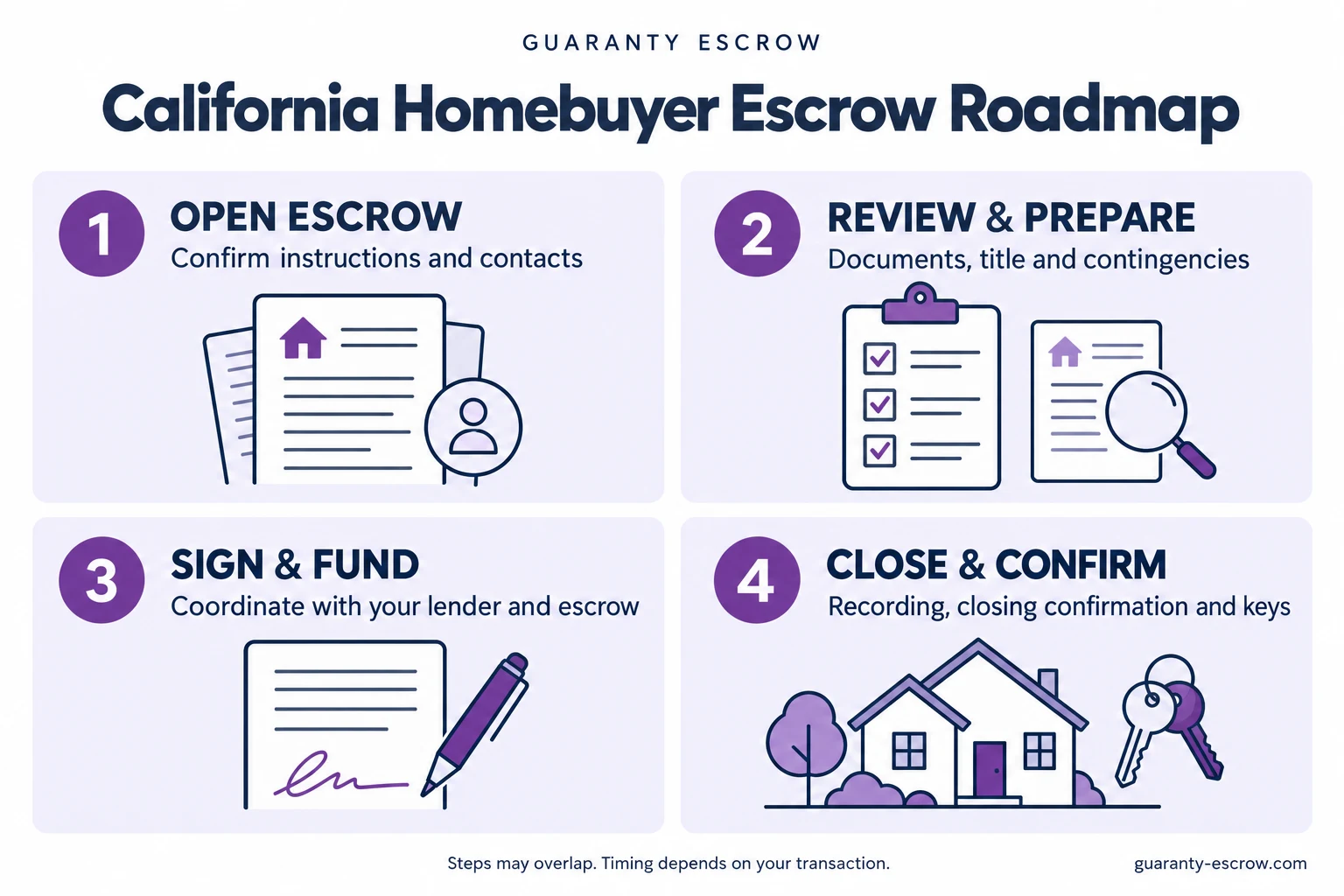
The short version: open escrow, return your paperwork, complete property and loan reviews, confirm closing costs, sign the required documents, and wait for confirmation that closing is complete. Some steps happen at the same time. Signing is not the same as funding, recording or receiving the keys.
See the roadmap | Buyer checklist | Common questions
Interactive planning tool
Explore Your Path to Closing
Select your purchase type, then open each milestone for the right questions to ask. This is a planning guide, not a schedule or confirmation that your file is ready to close.
01 · Open escrow and organize
Ask escrow: Who is my assigned officer? What documents, deposit instructions and deadlines apply to my file?
Ask your agent: Which contract dates should I track?
02 · Complete reviews and requirements
Coordinate inspections, disclosures, title and any association review with the appropriate professionals.
Mortgage path: Ask your lender which loan conditions, appraisal items and insurance requirements remain.
Cash path: Confirm your funding plan with escrow. No mortgage does not mean no title, contract or closing requirements.
03 · Review, sign and arrange funds
Review your estimated closing statement, verify payment instructions through a trusted contact, and plan identification and signing arrangements.
Mortgage path: Confirm required disclosures and timing with your lender. Signing alone does not authorize loan funding.
Cash path: Ask escrow about the accepted payment method and your file’s funding deadline. Do not assume transferred funds are immediately available.
04 · Confirm closing and possession
Wait for escrow’s confirmation that the applicable closing and recording steps are complete. Coordinate keys and possession with your agent under your agreement.
Remember: Signing, funding, recording and possession are separate milestones. Steps may overlap.
Without JavaScript, mortgage guidance is shown. Cash buyers skip loan-specific steps but should confirm all contract, title and funding requirements with escrow.
What Does Escrow Do for a Homebuyer?
Escrow is a neutral process for holding and releasing funds and documents under written instructions. Guaranty Escrow coordinates the escrow side of the transaction with buyers, sellers, agents, lenders and title professionals. Escrow does not negotiate the purchase for you, approve your loan or replace your legal or tax advisor.
This guide covers the purchase closing process, not a mortgage account used later to collect property taxes and insurance. Learn more about our residential real estate escrow services and use the escrow glossary for unfamiliar terms.
Your California Escrow Roadmap
1. Open Escrow and Confirm Your Next Steps
The purchase agreement and opening instructions set the starting point for the file. Confirm your escrow officer’s contact details, deposit deadline and approved delivery method. Do not rely on a generic timeline instead of the dates in your agreement.
Your action: keep a copy of the signed agreement and ask who will confirm receipt of your deposit. Verify payment instructions before moving funds.
2. Complete the Opening Package
Escrow may request identification, contact information, ownership or vesting details, insurance information and transaction forms. Complete the requested items promptly and ask how sensitive information should be delivered securely. Questions about how to hold title belong with your qualified legal or tax advisor.
Your action: check names and contact information carefully. Do not send Social Security numbers, bank details or identity documents through a public website form or ordinary email.
3. Review the Property, Title and Disclosures
Work with your agent and appropriate specialists on inspections, disclosures, title questions and any association documents that apply. For a South Bay condo or townhome, ask early who is obtaining the association package and which review deadlines apply. A property inspection, appraisal and title review serve different purposes.
Your action: track your contract deadlines with your agent. Escrow does not inspect the property or decide whether you should remove a contingency.
4. Keep Financing and Contract Changes Coordinated
If you are financing the purchase, respond to your lender’s requests and confirm any remaining loan conditions. If the buyer and seller agree to a change, the appropriate signed amendment or instructions need to reach escrow and, where relevant, the lender.
Your action: ask your lender about outstanding items and your agent about agreed changes. A cash purchase skips loan-specific steps, but still has its own contract, title, funding and closing requirements.
5. Review Closing Costs and Prepare Final Funds
Review the estimated closing statement and ask about charges, deposits, credits and the remaining funds needed. For mortgages subject to the Closing Disclosure rules, the borrower must receive that disclosure at least three business days before closing. The CFPB explains the timing and loan exceptions; your lender should confirm what applies to your loan.
Your action: ask escrow for the accepted payment method, verified instructions and your file’s funding deadline. Do not assume a universal two-business-day deadline or that a bank transfer will be available immediately.
6. Sign Documents and Complete Funding Requirements
Escrow coordinates the required signing arrangements. Confirm identification, notary, travel and scheduling needs in advance. Review documents before signing and direct loan questions to the lender. The lender may still need to review signed documents and satisfy conditions before authorizing funding.
Your action: stay available for questions. Do not treat a completed signing appointment as confirmation that escrow has closed.
7. Confirm Recording, Closing and Possession
When the required conditions and funds are in place, escrow and title coordinate the applicable recording and closing steps. Wait for your escrow officer’s confirmation of completion. Your agreement governs possession and key delivery, which your agent can help coordinate.
Your action: retain your final closing documents and ask whom to contact about any remaining questions. Do not schedule possession solely around an anticipated signing or funding time.
Homebuyer Escrow Checklist
- Confirm your escrow officer and save a trusted contact number.
- Track deposit, inspection, financing and closing dates from your agreement.
- Return requested forms through the approved secure channel.
- Coordinate title, insurance and association questions early.
- Compare closing documents with your expectations and ask about differences.
- Verify final-fund instructions independently before paying.
- Arrange signing, identification and any travel needs.
- Wait for confirmed closing and your contractual possession arrangements.
Protect Your Information and Closing Funds
Unexpected payment changes are a warning sign. Before acting on payment instructions, contact your escrow officer using a trusted number you independently verified, not a number supplied in the unexpected message. Ask about the approved secure portal and verification process. Never post account information or upload sensitive documents to a general inquiry form.
If you suspect a payment was misdirected, contact your bank and escrow officer immediately. The CFPB provides additional mortgage-closing scam education.
Homebuyer Escrow FAQs
How long does escrow take in California?
Your agreement sets a target date. Financing, inspections, title, association documents, signatures and other conditions can affect timing. Ask your agent, lender and escrow officer about your specific schedule rather than relying on a fixed 30- or 45-day promise.
Is signing the loan paperwork the same as closing?
No. Signed documents may still need review, funds may need to be received, and recording or other conditions may remain. Wait for your escrow officer to confirm completion.
Who explains a loan charge or a contract deadline?
Your lender handles loan terms and lending requirements. Your agent can help with the purchase agreement and negotiated deadlines. Escrow can explain its requests and closing statement entries. Legal or tax questions should go to your own qualified advisor.
When will I receive the keys?
Possession depends on your agreement and confirmed completion of the required closing steps. Coordinate key delivery with your agent; it is not automatically the moment you sign.
Related Guaranty Escrow Resources
Questions About Your California Escrow?
Connect with Jessica Kalkin, Business Development, to discuss your transaction and reach the appropriate Guaranty Escrow team. If you already have an open file, contact your assigned escrow officer for file-specific instructions.
Call Jessica: 310-935-8854
Jessica@gepartnersllc.com
Contact Guaranty Escrow
This resource provides general education, not legal, tax, lending or investment advice. Your purchase agreement, written escrow instructions, lender requirements and transaction circumstances determine the steps for your file.
Continue Your Escrow Planning
Educational reference: California DFPI: the neutral escrow role.