
You have accepted an offer on your California home. What happens next, what should you prepare, and when can you expect confirmation that the sale is complete? This seller escrow roadmap organizes the process into six practical milestones, from opening the file to confirming proceeds and keeping your records.
Use this guide to plan conversations with your team. For a document-focused companion and an interactive explanation of sale price versus net proceeds, see our California seller escrow checklist.
The key distinction: Signing, funding, recording, possession and proceeds delivery are separate milestones. Your contract and file requirements determine the sequence and timing, not a generic calendar.
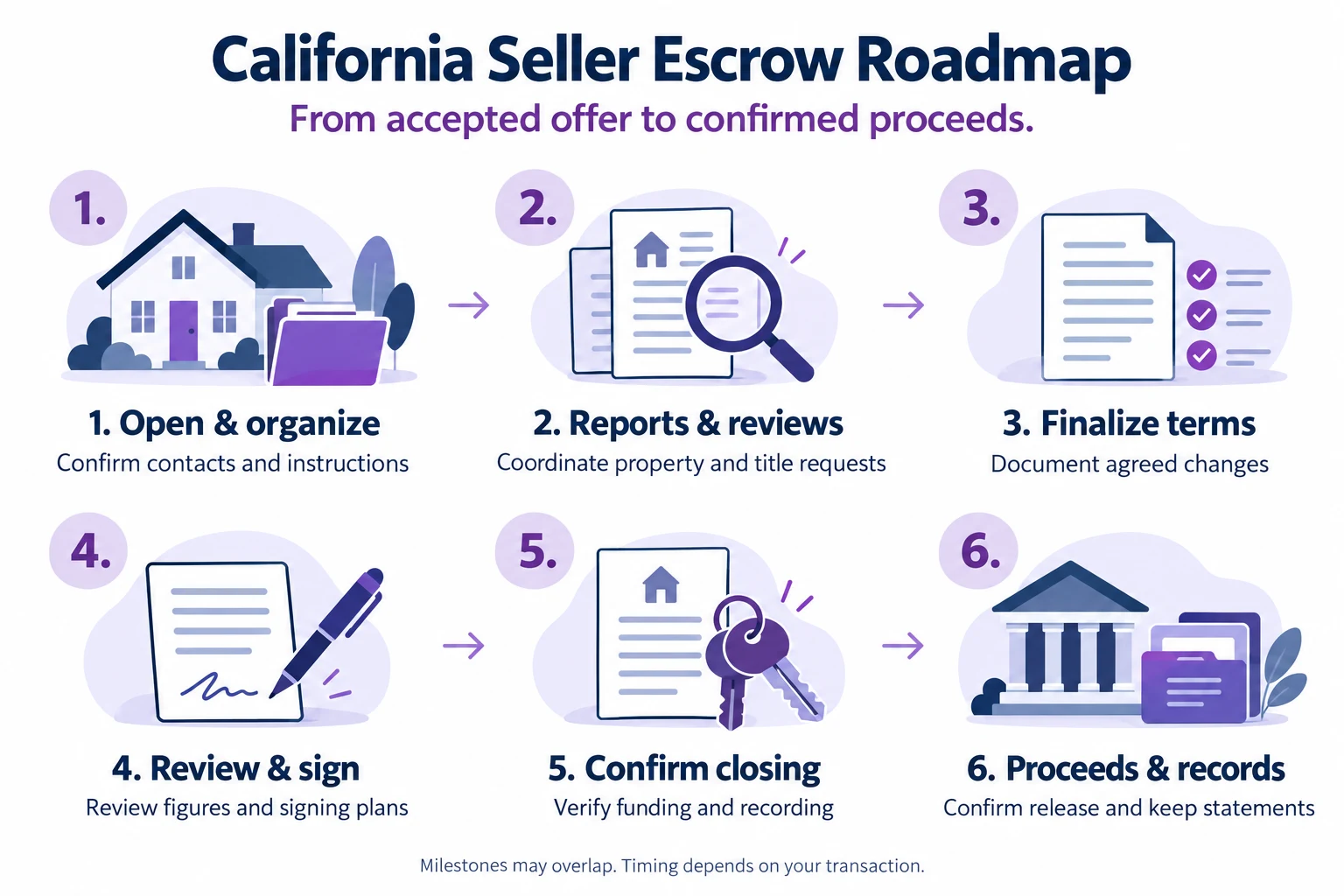
Interactive milestone navigator
What Should I Focus on Next?
Choose the stage closest to your situation for a practical conversation starter. Steps can overlap. This tool does not assess your file or confirm that you are ready to close.
1. Open and organize
Your focus: Confirm your assigned escrow officer, file number, contract dates and secure document-delivery process.
Start this conversation: Ask your agent which dates you need to track and ask escrow what is still needed from you.
Do not assume: An accepted offer or a deposit receipt is not a substitute for confirmation of your file’s status.
2. Reports and reviews
Your focus: Help your team obtain requested property, association, title and payoff information.
Start this conversation: Ask your agent about access for inspections and any local property requirements. Ask escrow about outstanding document requests.
Do not assume: An inspection appointment, appraisal or ordered report does not mean all closing conditions are satisfied.
3. Finalize terms
Your focus: Make sure agreed changes, credits, repairs and extensions reach the appropriate parties in writing.
Start this conversation: Ask your agent to explain agreement changes and ask escrow how documented changes affect your closing figures.
Do not assume: A verbal agreement or a pending credit is not the same as an approved closing instruction.
4. Review and sign
Your focus: Review your estimated statement, clarify questions and arrange identification, signing and any required notarization.
Start this conversation: Tell your escrow officer about travel, unavailable signers or trust ownership before the signing appointment.
Do not assume: Signing documents is not confirmation of funding, recording or proceeds availability.
5. Confirm closing
Your focus: Wait for confirmation of the applicable funding and recording steps, then coordinate possession under your agreement.
Start this conversation: Ask escrow what remains before closing and ask your agent when keys and possession should transfer.
Do not assume: A scheduled closing date or a buyer’s signed loan documents do not guarantee that closing has occurred.
6. Proceeds and records
Your focus: Confirm approved proceeds arrangements and keep the final closing statement and related records.
Start this conversation: Ask escrow about release status and ask your bank about availability. Ask your tax advisor which records to retain.
Do not assume: Funds released by escrow and funds available in your account are not always the same moment.
No personal details are needed. This tool does not submit or store your selection.
All six stage summaries are shown below the selector when JavaScript is unavailable.
The Six Milestones in a California Home Sale
1. Open Escrow and Organize Your Information
Confirm who is handling your file and how to reach them. Ask which opening documents are needed, how to return them securely and which dates require your attention. Tell your team early about travel plans, multiple owners or a sale involving a trust.
Keep a simple contact list for your agent, assigned escrow officer and other advisors. Escrow is a neutral holder of funds and documents acting under the applicable written instructions, not a representative negotiating for either side. The California Department of Real Estate’s escrow guide explains that role.
2. Coordinate Reports, Inspections and Reviews
Your agent can help coordinate property access for the buyer’s inspections and, when applicable, an appraisal. Provide requested association or management contacts for a condo or HOA property. Ask your agent which city-specific reports or inspections apply to the property rather than assuming every California city has the same requirements.
Respond to escrow and title requests for ownership, loan or payoff information through the approved process. Keep track of what has been requested, what you have supplied and which questions remain with another professional.
3. Finalize Agreed Terms and Closing Figures
If negotiations produce a repair arrangement, credit, extension or other change, work with your agent to document it and get it to the appropriate parties. Ask how the change affects the closing estimate and whether further review is needed.
Review the difference between the sale price and estimated net proceeds. Ask about payoffs, agreed charges, credits and prorations. Our seller checklist and statement explorer provides a clearly fictional example. Your actual figures come from your transaction, and an estimate may change.
4. Review Documents and Arrange Signing
Read your documents and raise questions before the appointment. Ask your escrow officer what identification, signing arrangements and notarization are needed for your file. Flag unavailable signers or travel early instead of waiting until the planned closing date.
For trust-owned property, ask the appropriate legal, title and escrow professionals about authority and requested documents. Our trust-property sale proceeds guide helps organize that discussion without assuming who may sign or receive funds.
5. Confirm Funding, Recording and Possession
If the buyer is financing the purchase, ask your team what lender-related steps remain. A cash purchase does not remove the need to satisfy applicable contract, title and escrow requirements. Do not plan around an assumption that a buyer’s loan always funds one day before closing.
Wait for your escrow officer’s confirmation of the applicable closing and recording steps. Coordinate keys, move-out and possession with your agent under the agreement. Signing an escrow package is not, by itself, that confirmation.
6. Confirm Proceeds and Keep Your Records
Discuss proceeds arrangements before closing, including the approved recipient, required review and how to confirm release status. Ask separately when your receiving bank expects funds to be available. This roadmap does not promise same-day payment or a fixed 24-hour turnaround.
Retain your final closing statement and related documents, and ask your tax advisor which records and forms you will need. If your sale is connected to a purchase, tell both transaction teams early so they can discuss dependencies without assuming immediate availability of sale proceeds.
Protect the Proceeds Conversation
Unexpected changes to payment instructions deserve a pause. Verify them with a trusted contact using a phone number you already confirmed, not one supplied in the new message. Do not send account numbers through a public website form. Ask your assigned escrow officer for the approved secure process. The CFPB’s closing-fraud guidance explains why independent verification matters.
Seller Escrow Roadmap FAQs
Does this roadmap replace my escrow instructions?
No. It is an educational planning guide. Your purchase agreement, escrow instructions and transaction-specific requirements control your file. Ask your assigned escrow officer about its current status.
Does the buyer’s deposit mean everything is ready to close?
No. Ask escrow to confirm receipt and file status, then ask which other items remain. A deposit is one part of the transaction, not confirmation that reviews, signing, funding or recording are complete.
How long will seller escrow take?
Use the dates in your agreement as planning targets and confirm progress with your team. Reports, approvals, documents and other dependencies can affect timing. The stages in this guide may overlap and are not a fixed-day schedule.
When should I hand over the keys?
Coordinate possession with your real estate agent under the agreement and the confirmed closing status. Do not use the signing appointment or a scheduled date alone as the signal to release keys.
Will I receive sale proceeds within 24 hours?
Do not assume a universal deadline. Ask escrow about release requirements and status for your file, and ask the receiving bank about availability. A planned closing date is not a guarantee of an account credit at a particular time.
Related Guaranty Escrow Resources
- California seller escrow checklist: preparation tasks and an illustrative closing statement.
- California homebuyer escrow guide: useful if you are also purchasing a home.
- Trust-property sale proceeds: questions about authority, documents and receiving arrangements.
- Real estate escrow services: explore Guaranty Escrow’s transaction support.
- Escrow glossary: explanations of common terms.
Plan Your California Home Sale With Jessica
Have a question about getting started with Guaranty Escrow? Contact Jessica Kalkin, Business Development, to connect with the team.
310-935-8854
Jessica@gepartnersllc.com
Already have an open file? Contact your assigned escrow officer for document requests, closing status and proceeds instructions.
This resource provides general education, not legal, tax or financial advice. Property, lender, title and escrow requirements vary. Consult the appropriate licensed professional for advice about your circumstances.